Bible Translations Closest to the Original Text: A Clear Guide for Readers

Why "Closest to the Original" Is More Complicated Than You Think
If you've ever searched for bible translations closest to the original text, you've probably landed on a list that ranks a few versions and calls it a day. That approach misses the real issue. There is no single "most accurate" translation — because accuracy depends entirely on what you're trying to preserve: the words, the meaning, or the effect on the reader. Understanding this distinction is the single most useful thing a serious Bible student can do before picking up any translation.
This guide cuts through the oversimplification. We'll look at translation philosophy, name specific versions with concrete trade-offs, and show you how your translation choice ripples into every other study tool you use — from cross-references to historical context features.
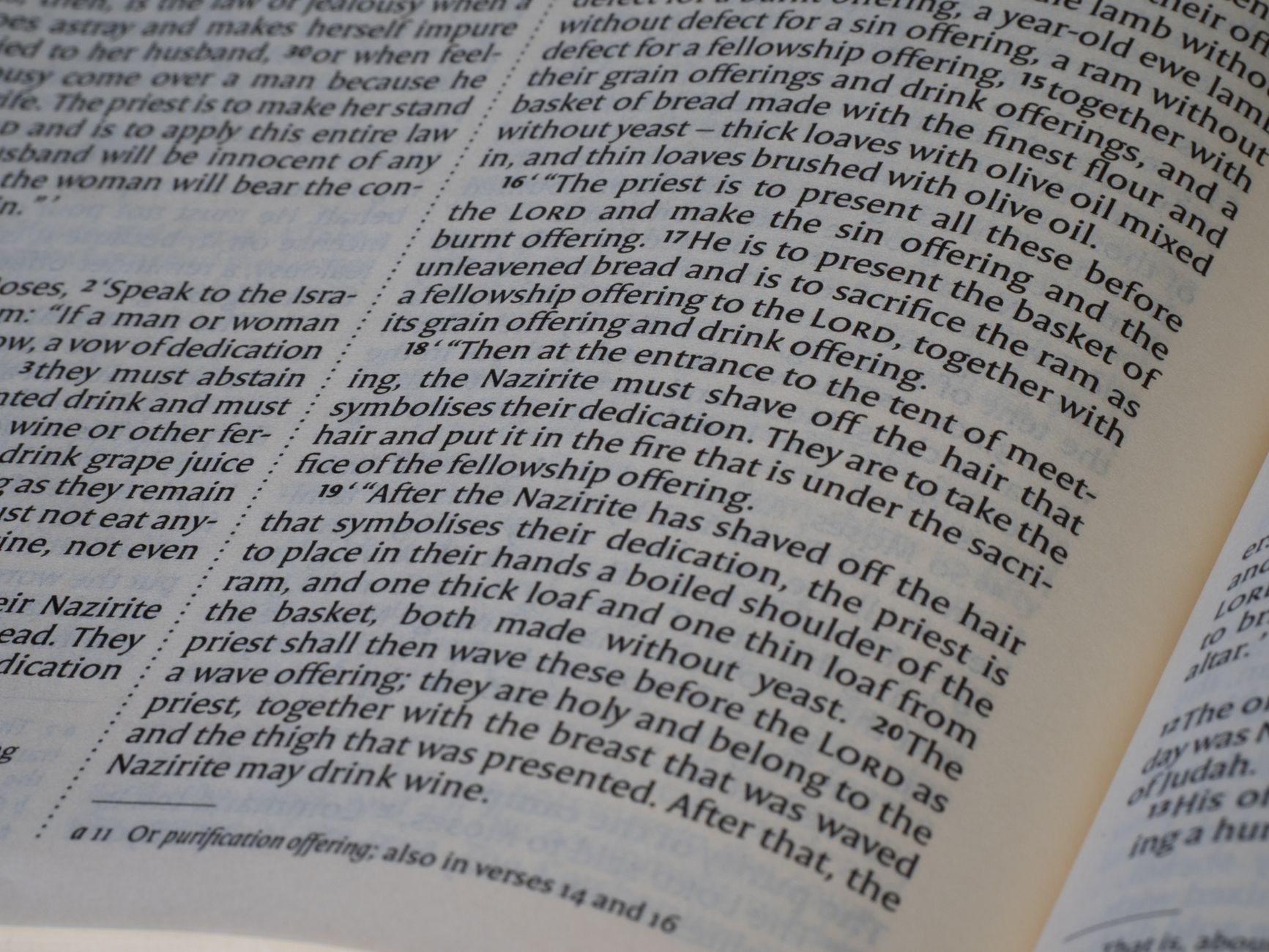
The Two Philosophies That Shape Every Translation
Every Bible translation sits somewhere on a spectrum between two poles. Knowing where a version sits tells you far more than any "accuracy rating."
Formal Equivalence: Word-for-Word Fidelity
Formal equivalence (also called word-for-word or literal translation) tries to mirror the structure of the original Hebrew, Aramaic, and Greek as closely as English allows. Translators aim to render each source word with a consistent target word. The goal is to let the reader work through the text themselves, with minimal interpretive filtering.
The trade-off is real: ancient Greek and Hebrew syntax is nothing like modern English. A strictly literal rendering can feel awkward or ambiguous — sometimes deliberately so, because the source text itself was ambiguous. That ambiguity carries theological weight, and a formal translation preserves it rather than resolving it for you.
Dynamic Equivalence: Thought-for-Thought Clarity
Dynamic equivalence (thought-for-thought) prioritizes communicating the meaning of the original rather than its exact wording. Translators ask: "What did this phrase mean to a first-century reader?" and then find the closest modern equivalent. The result reads more naturally but involves more interpretive decisions made on your behalf.
Neither approach is dishonest. Both require enormous scholarship. The mistake is treating one as "accurate" and the other as "paraphrase" — that binary ignores a whole spectrum of hybrid approaches used by the most-read translations in the world.
Which Bible Translations Are Closest to the Original Text?
Here is a frank look at the major versions, ranked roughly from most formally equivalent to most dynamically equivalent. Each entry includes a real trade-off — not just a promotional summary.
1. New American Standard Bible (NASB 2020)
The NASB is widely regarded among scholars as the most consistently word-for-word English translation available. Its 2020 revision updated archaic language while preserving its commitment to formal equivalence. When a Greek verb is in the aorist tense, the NASB tries to reflect that. When a Hebrew noun is plural, you'll see it in the English too.
Trade-off: Readability suffers in places. Passages like Romans 5 become dense and require re-reading. For cross-reference work and word studies, this density is a feature, not a bug — but it makes the NASB a poor choice for devotional reading or sharing with new believers.
2. English Standard Version (ESV)
The ESV occupies a sweet spot that has made it the default for many seminaries and Reformed churches. It's formally equivalent but edited for readability more aggressively than the NASB. It draws heavily on the RSV (Revised Standard Version) tradition, which itself descended from the KJV lineage.
Trade-off: The ESV has faced criticism for translation choices that reflect specific theological commitments, particularly around gender language. For instance, the Greek adelphoi (which can mean "brothers and sisters" in a mixed group) is often rendered simply as "brothers." Readers doing careful word studies should note this pattern.
3. King James Version (KJV) and New King James Version (NKJV)
The KJV (1611) was a monumental achievement in formal equivalence — for its time. Its primary textual base, however, is the Textus Receptus, a Greek manuscript tradition that post-dates the oldest known manuscripts by over a thousand years. Modern textual criticism, using manuscripts like the Codex Sinaiticus and Codex Vaticanus (4th century), has produced a more reliable base text.
The NKJV updates the language while keeping the Textus Receptus base, and it adds footnotes noting where the newer critical text differs. That transparency is genuinely useful for study. Still, if closeness to the earliest manuscripts is your goal, the KJV/NKJV tradition is not the strongest choice.
4. New Revised Standard Version Updated Edition (NRSVue)
The NRSVue (2021) is the translation of choice for most academic biblical scholarship. It uses the best available critical texts — the Biblia Hebraica Stuttgartensia for the Old Testament and the Nestle-Aland 28th edition for the New Testament — which are the closest we can get to reconstructing the original autographs. It balances formal and dynamic equivalence thoughtfully.
Trade-off: Its inclusive language choices are a point of contention for some readers. It's also less common in church settings, so study resources built around it are fewer than those for the ESV or NIV.
5. New International Version (NIV)
The NIV is the world's best-selling modern translation — and it leans toward dynamic equivalence. Its translators made thousands of decisions to smooth out Greek and Hebrew idioms into natural English. For new readers, this is invaluable. For deep word studies, it can obscure distinctions that matter.
Trade-off: The NIV sometimes collapses two different Greek words into one English word, or expands one Greek word into a phrase. If you're tracking a specific term (say, agape vs. philia for different kinds of love), the NIV may not preserve that distinction consistently.

The Manuscript Question: What "Original Text" Actually Means
Here's the uncomfortable truth: we do not have the original manuscripts of any biblical book. What we have are thousands of copies — some dating to within decades of the originals, others copied centuries later. The discipline of textual criticism compares these manuscripts to reconstruct the most likely original wording.
The two main manuscript traditions for the New Testament are:
- The Critical Text — based on the oldest and most geographically diverse manuscripts, used by the NASB, ESV, NIV, and NRSVue.
- The Textus Receptus — a later compilation used as the basis for the KJV and NKJV. It's not "corrupt," but it reflects a narrower and generally later manuscript tradition.
For the Old Testament, the primary source is the Masoretic Text, preserved by Jewish scribes between the 6th and 10th centuries AD. The Dead Sea Scrolls (discovered 1947) confirmed that this tradition is remarkably stable — in many places, the text changed by less than 5% over a thousand years of copying. That's a stunning level of fidelity.
Understanding which manuscript tradition a translation uses is more important than any "accuracy score" you'll find online. A translation built on the best-attested manuscripts, rendered with care, will always outperform a more "literal" version built on a weaker textual foundation.
How Your Translation Choice Affects Study Tools and Cross-References
This is where translation philosophy stops being theoretical and starts affecting your daily study. If you use a Bible app with cross-references, the translation you read in will shape which connections you can see — and which you'll miss.
Consider this: cross-references often link passages because they share a specific Greek or Hebrew word. If your translation renders that word differently in two places (as dynamic equivalence translations sometimes do), the verbal link disappears from the English surface. You'd need to look at the original language — or use a tool that surfaces those connections for you — to catch it.
This is one reason that tools like a robust cross-reference Bible app matter so much. The best apps let you compare translations side by side, so you can read the NIV for comprehension and check the NASB when a word study demands precision. That layered approach beats committing to one translation and hoping it covers everything.
Formal equivalence translations also interact better with interlinear tools — resources that show the original Greek or Hebrew word beneath each English word. If you've ever wanted to trace a term like hesed (often translated "lovingkindness," "steadfast love," or "mercy" depending on the version), a formal translation makes that tracing far more consistent. Learn more about how cross-references work across the Bible and why translation consistency matters for finding them.
A Practical Framework: Choosing the Right Translation for the Right Task
Rather than picking one translation and defending it forever, use a tiered approach. Here's a concrete framework:
- For deep word studies and cross-reference work: NASB 2020 or ESV as your primary. These preserve the verbal texture of the original most consistently.
- For academic or theological research: NRSVue. It uses the best critical texts and is the standard in peer-reviewed biblical scholarship.
- For comprehension and devotional reading: NIV or Christian Standard Bible (CSB). Both prioritize clarity without becoming full paraphrases.
- For checking interpretive choices: Keep the KJV or NKJV handy as a reference point. Its footnotes (in the NKJV) flag where manuscript traditions diverge.
- For historical and cultural context: Pair any translation with a Bible app that surfaces background information. The words on the page are only part of the picture.
This multi-translation habit is exactly what the Prism Bible App is built for. Prism lets you study with multiple translations, built-in cross-references, and historical context — all in one place. Get started with Prism and see how a layered translation approach transforms your study sessions. Sign up free today.

Common Mistakes Readers Make When Evaluating Translations
Even experienced readers fall into these traps. Knowing them in advance saves real frustration.
- Assuming "literal" means "accurate." A wooden, word-for-word rendering of an idiom can be more misleading than a dynamic translation. For example, the Hebrew phrase "long of nose" literally means patient — a literal translation would baffle most readers.
- Ignoring the textual base. Two translations can both claim to be "word-for-word" but use different manuscript families. The words they're being literal to differ.
- Treating paraphrases as translations. The Message and Living Bible are paraphrases — one person's interpretive rendering. They have value for reading but should never anchor a word study or doctrinal argument.
- Using only one translation for everything. No single version is optimal for every task. Devotional reading, verse memorization, word studies, and theological research each have a best tool.
- Neglecting context entirely. Even the most accurate translation cannot tell you what a passage meant to its original audience without historical and cultural background. Translation and context work together. Explore what biblical context means and why it's inseparable from translation work.
The Bottom Line on Finding the Most Faithful Translation
The question "which Bible translation is closest to the original text?" has a real answer — but it's layered. For the New Testament, the NASB 2020 and NRSVue are built on the strongest manuscript foundations and rendered with the highest degree of formal fidelity. For the Old Testament, the differences between major translations are smaller, since most draw from the same Masoretic base.
What separates good Bible study from great Bible study isn't picking the "right" translation once. It's learning to move between translations fluidly, understanding why they differ, and using tools that help you see the original text behind the English. That's a skill — and like any skill, it compounds over time.
Discover how the top Bible translations compare for deep study vs. daily reading, and find the setup that fits your goals. The right translation, paired with the right tools, makes the ancient text genuinely accessible — not just readable, but understood.
For further reading on manuscript traditions and textual criticism, the Society of Biblical Literature publishes peer-reviewed resources that go deep on how scholars reconstruct the original text. It's worth bookmarking if you want to go beyond surface-level translation comparisons.