What Are Bible Cross References (And How Do They Actually Help You Study Scripture)?
Understanding Cross References in the Bible: A Simple Starting Point
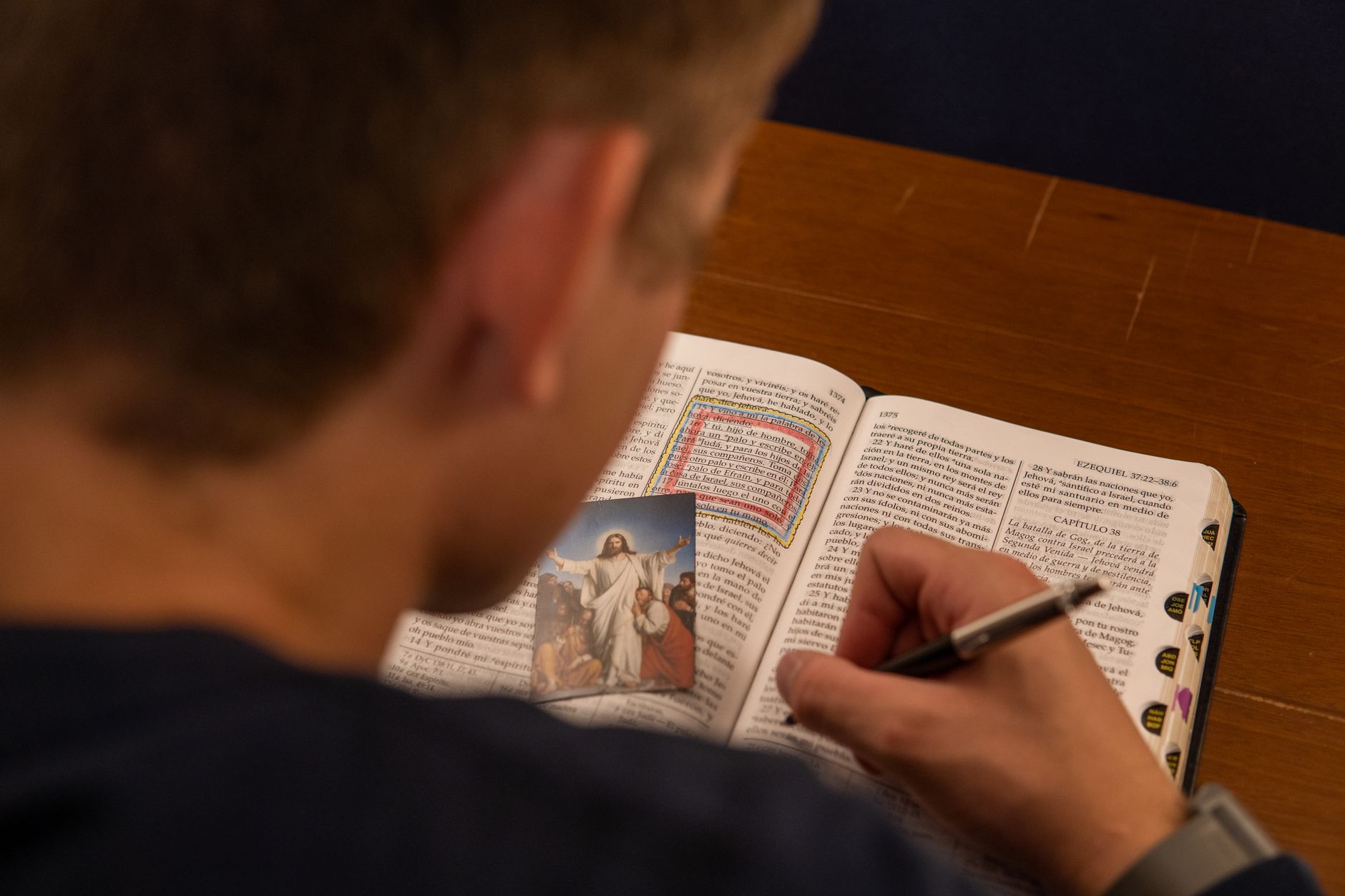
If you have ever opened a study Bible and noticed small letters or numbers tucked beside a verse, you have already seen cross references in the Bible at work. These tiny markers point you to other passages that share a common theme, word, or idea. For many readers, they feel like a mystery. However, once you understand what they are and how to use them, they become one of the most powerful bible study tools available.
Cross references show that the Bible is not a random collection of books. Instead, it is a deeply connected story. One verse in Genesis can echo through Psalms, land in Isaiah, and find its fullest meaning in Revelation. That kind of connection is not accidental — it is the backbone of biblical theology.
In this guide, we will explain what cross references are, where they come from, and how they can transform the way you read and understand Scripture. Whether you are a new believer or a seasoned student, this article will give you practical tools to go deeper.
What Exactly Are Cross References in the Bible?
A cross reference is simply a link between two or more Bible passages that share something in common. That connection might be a repeated word, a fulfilled prophecy, a shared theme, or a direct quote. For example, when Jesus says in John 6:35, "I am the bread of life," a cross reference might point you back to Exodus 16, where God provided manna in the wilderness. Suddenly, the miracle in the desert becomes a preview of Christ himself.
Cross references can be grouped into a few main types:
- Verbal cross references — passages that share the same word or phrase
- Thematic cross references — passages that explore the same idea or doctrine
- Prophetic cross references — Old Testament prophecies linked to their New Testament fulfillment
- Historical cross references — parallel accounts of the same event (for example, Kings and Chronicles)
- Typological cross references — people or events that foreshadow later realities (like Adam foreshadowing Christ in Romans 5)
According to OpenBible.info's cross-reference dataset, the Bible contains over 340,000 cross-reference connections. That number alone tells you just how tightly woven this book really is.
Where Do Cross References Come From?
Cross references were not written by the original biblical authors. Instead, they were added by scholars and editors over centuries of careful study. The practice of linking related passages goes back to early Jewish rabbinical tradition, where teachers would cite parallel texts to explain meaning. Later, Christian scholars continued this work as the canon of Scripture developed.
One of the most famous cross-reference systems is the Treasury of Scripture Knowledge, compiled in the early 1800s. It contains roughly 500,000 cross-reference entries and remains a foundational resource for Bible scholars today. Modern study Bibles — both print and digital — build on this kind of work, refining and expanding the connections over time.
Furthermore, not all cross-reference systems are the same. Some focus on verbal links only. Others prioritize theological themes. A good Christian study Bible app will give you access to multiple layers of cross references, so you can explore connections at whatever depth suits your study.
Additionally, digital tools have made it easier than ever to surface these connections instantly. Instead of flipping between pages, you can tap a verse and see every related passage in seconds.
How Cross References Deepen Your Understanding of Biblical Context

One of the biggest challenges in Bible study is understanding biblical context. A verse can mean something very different when you read it in isolation versus when you see it connected to the rest of Scripture. Cross references are one of the best tools for solving this problem. They pull the camera back and show you the bigger picture.
Consider Psalm 22:1 — "My God, my God, why have you forsaken me?" On its own, it reads as a cry of despair. However, a cross reference to Matthew 27:46 shows that Jesus quoted this exact verse from the cross. Suddenly, the Psalm is not just a lament — it is a prophecy. And reading the rest of Psalm 22 reveals a stunning shift from suffering to praise, which mirrors the arc of the gospel itself.
This is what biblical context really means: understanding a passage in light of the whole story. Cross references are the threads that stitch that story together.
Practical Example: Tracing a Theme Through Scripture
Let us say you are reading John 1:29, where John the Baptist calls Jesus "the Lamb of God." A cross reference might send you to:
- Genesis 22 — Abraham's son Isaac asks, "Where is the lamb?" as they climb the mountain
- Exodus 12 — The Passover lamb, whose blood protected Israel from death
- Isaiah 53:7 — The suffering servant who is led "like a lamb to the slaughter"
- Revelation 5:12 — The heavenly chorus singing, "Worthy is the Lamb who was slain"
Following these cross references turns a single title for Jesus into a sweeping theological story that spans the entire Bible. Consequently, your understanding of who Jesus is grows richer with every connection you trace.
How to Use Cross References in the Bible Effectively
Knowing that cross references exist is one thing. Using them well is another. Many readers glance at them and move on. However, the real benefit comes when you slow down and actually follow the thread. Here are some practical steps to get started:
- Start with one verse. Pick a passage you are studying and find its cross references. Do not try to follow every link at once.
- Read the full context of the linked passage. Do not just read the verse cited — read the surrounding paragraphs too.
- Ask what the two passages have in common. Is it a word, a theme, a character, or a pattern?
- Look for progression. Does the later passage fulfill, expand, or explain the earlier one?
- Write down what you notice. Journaling your observations helps you retain and apply what you discover.
Moreover, using a Bible app that surfaces cross references in a clean, readable format makes this process much easier. When the links are right there beside the text, you are far more likely to follow them.
For a deeper look at how many connections exist in Scripture, check out our post on how many cross references are in the Bible. The numbers are genuinely surprising.
Cross References vs. Commentaries: What Is the Difference?
Many people confuse cross references with commentaries. They are related but different. A commentary is a scholar's explanation of what a passage means. A cross reference lets Scripture interpret Scripture. Both are valuable, but cross references have a unique advantage: they keep you inside the Bible itself.
Specifically, cross references train you to think biblically. Instead of relying on one expert's opinion, you learn to see how the whole Bible speaks to a topic. That skill builds confidence and depth over time.
According to Bible Gateway's Encyclopedia of the Bible, the practice of using Scripture to interpret Scripture — often called the analogy of faith — has been a cornerstone of biblical interpretation since the Reformation. Cross references are the practical tool that makes this principle work in everyday study.
Cross References in the Bible Inside a Modern Bible App
Print Bibles have always included cross references in the margins, but digital apps have taken this feature to a new level. A well-designed Bible app lets you tap a verse and instantly see every related passage. Some apps even display cross references visually, showing you how passages cluster around a theme or book.
Prism Bible App is built with this kind of depth in mind. It pairs cross references with multiple translations, historical background, and personalized reading plans — all in one place. Additionally, features like the interactive Bible map help you see the geographical context behind the passages you are reading, which makes cross references even more meaningful.
For instance, when you read about Paul's journeys in Acts and cross-reference his letters to the churches he founded, seeing those locations on a map brings the connections to life. Consequently, you are not just reading words — you are following a real story across real places.
Furthermore, Prism's reading plans are designed to surface thematic connections across the Bible, which is another form of guided cross-referencing. Instead of reading the Bible in isolation, you follow threads that tie the whole story together.
Tips for Getting the Most Out of Cross References in a Bible App
- Use the search function to find all occurrences of a key word or phrase across Scripture
- Compare how different Bible translations render the same verse — subtle word choices often reveal new connections
- Combine cross references with historical context notes to understand why a connection matters
- Use reading plans that are built around themes, not just chronology
- Take notes inside the app so you can revisit your discoveries later
Ready to explore cross references in a whole new way? Get started with Prism Bible App today and experience how connected the Bible really is. Sign up for free and start your first reading plan in minutes.
Why Cross References Matter for Theology and Faith
Cross references are not just a study trick — they reveal something profound about the nature of the Bible itself. The fact that a shepherd's song in Psalm 23 echoes through Ezekiel 34 and lands in John 10 is not a coincidence. It suggests that the Bible has a single, unified Author behind its many human voices.
For everyday Christians, this has real implications for faith. When you see how the promises of God in the Old Testament are fulfilled in the New, your trust in those promises grows. Notably, cross references make the Bible feel less like a library of ancient texts and more like a living conversation across time.
As The Gospel Coalition explains, the practice of letting Scripture interpret Scripture guards against misreading any single passage in isolation. Cross references are the practical means by which this interpretive principle comes to life in daily study.
Therefore, learning to use cross references is not just about knowing more facts. It is about seeing the Bible as the unified, coherent, and trustworthy Word that Christians have always believed it to be.
Start Using Cross References in Your Bible Study Today
Cross references in the Bible are one of the most underused tools in everyday Christian life. They are not just for scholars or seminary students. They are for anyone who wants to understand Scripture more deeply and see how the whole Bible fits together as one story.
The good news is that you do not need a theology degree to get started. You just need a good tool and a curious heart. Prism Bible App is designed to make cross-reference study accessible, visual, and genuinely enjoyable for readers at every level.
Discover how Prism can transform your Bible study — explore our full suite of bible study tools and see what a difference connected Scripture can make. Your next great insight might be just one cross reference away.