From Free Online Bible Courses to Daily Habits: How Bible Apps Help You Actually Finish

Why Free Online Bible Courses Are Surging — But Completion Rates Are Not
Searches for free online Bible courses have never been higher. Thousands of believers every month type phrases like "Bible study courses at home free" or "free online Bible courses with certificates" into search engines. They are hungry to grow. However, most of them never finish what they start. Studies on online learning consistently show that self-paced course completion rates hover below 15% — and Bible courses are no exception.
The problem is rarely motivation. Most people who enroll in a free Bible study course genuinely want to understand Scripture more deeply. Furthermore, the content is often excellent. The real gap is structure — a daily system that keeps you accountable, tracks your progress, and connects what you are learning to the actual Bible text.
That is exactly where a powerful Bible study app steps in. Specifically, tools like reading plans, reminders, cross-reference notes, and progress tracking can transform a half-finished course into a life-changing habit. This guide shows you how to pair free Christian study courses with the right digital tools so you finish — and retain — everything you learn.

The Real Reason People Quit Free Online Bible Courses
Before fixing the problem, it helps to understand it. Most free online Bible courses are designed as standalone experiences. You watch a video, read a passage, and answer a quiz. However, when the tab closes, the lesson often closes with it.
Research from Pew Research Center shows that while many Americans engage with religious content online, consistent daily engagement remains a challenge. Additionally, without a personal connection to the Scripture passages being studied, information stays abstract and forgettable.
Here are the most common reasons people abandon Bible courses:
- No daily reminder system — life gets busy and the course slips away.
- No visible progress — it is hard to stay motivated when you cannot see how far you have come.
- Passive learning only — watching or reading without interacting with the text leads to poor retention.
- No connection to personal Bible reading — the course feels separate from daily devotional life.
- No community or accountability — solo learning without any feedback loop is easy to abandon.
Consequently, the solution is not a better course. The solution is a better system built around the course. That system lives inside a well-designed Bible app.
Step 1 — Choose the Right Free Online Bible Course for Your Goals
Not every free Bible course is built the same way. Some focus on theology. Others walk through individual books of the Bible. Still others offer certificates upon completion. Choosing the right one matters before you build your support system around it.
Here are some reputable places to find free online Bible courses:
- Bible Project — offers free video-based courses covering every book of the Bible with rich visual storytelling.
- Coursera and edX — host university-level theology and biblical studies courses, many free to audit.
- Global University (ICI) — provides structured courses with certificates for personal and ministry development.
- Open Seminary — offers free and low-cost seminary-level content for serious students.
Additionally, consider the length of the course. A 4-week course is far easier to finish than a 12-month program if you are just building the habit. Start with something achievable. Moreover, check whether the course ties its lessons directly to Scripture passages — those are the easiest to pair with a Bible app.

Step 2 — Build a Reading Plan That Mirrors Your Course
One of the most powerful ways to finish a Bible course is to sync it with a structured reading plan. When your daily Bible reading follows the same passages your course covers, learning stacks on learning. Retention improves dramatically.
For example, if your free online Bible course covers the Gospel of Mark, set up a reading plan that takes you through Mark chapter by chapter over the same weeks. Each day, you read the passage, then watch or listen to the course lesson. The two reinforce each other.
Explore structured reading plans on Prism Bible App to find options that align with popular Bible study topics, including Gospel surveys, Pauline epistles, Old Testament narratives, and more. Prism lets you customize your pace so the plan fits your course schedule — not the other way around.
Here is a simple framework for syncing your course with a reading plan:
- Note which Scripture passages your course covers each week.
- Set up a reading plan in your Bible app that covers those same passages daily.
- Read the passage first thing in the morning, then engage with the course lesson later in the day.
- Review your notes at the end of each week before moving forward.
Furthermore, this approach means you are never just passively consuming course content. You are actively engaging with the living text every single day.
Step 3 — Use Cross-References to Deepen Every Lesson
Free Bible courses introduce ideas. Cross-references help you own those ideas. When a course teaches you about grace in Ephesians 2, for instance, cross-references show you how that same theme runs through Romans, Galatians, and the Psalms. Suddenly, the lesson is not just a lecture — it is a thread woven through the whole Bible.
This is one of the most underused study habits among online learners. However, it is also one of the most rewarding. Notably, the Bible contains over 340,000 cross-references, forming a vast web of connected meaning across both Testaments.
Here is how to make cross-references a daily habit during your course:
- After each lesson, identify the key verse the course emphasized.
- Open that verse in Prism and explore its cross-references.
- Write a brief note connecting the cross-reference to the course theme.
- Over time, you will build a personal web of understanding that no course alone can give you.
Additionally, Prism's scripture tool makes this process fast and intuitive. Explore Scripture with cross-references on Prism to start connecting passages the moment a course lesson sparks your curiosity.
Step 4 — Set Reminders and Track Progress Like an Athlete
Consistency is not a personality trait. It is a system. Professional athletes do not rely on motivation to show up for practice. They rely on scheduled structure. The same principle applies to finishing a Bible course.
Set a specific time each day for your course and your Bible reading. Morning works well for many people, but the best time is the one you will actually keep. Use your Bible app's reminder feature to send a daily notification at that time. Treat it like an appointment you cannot cancel.
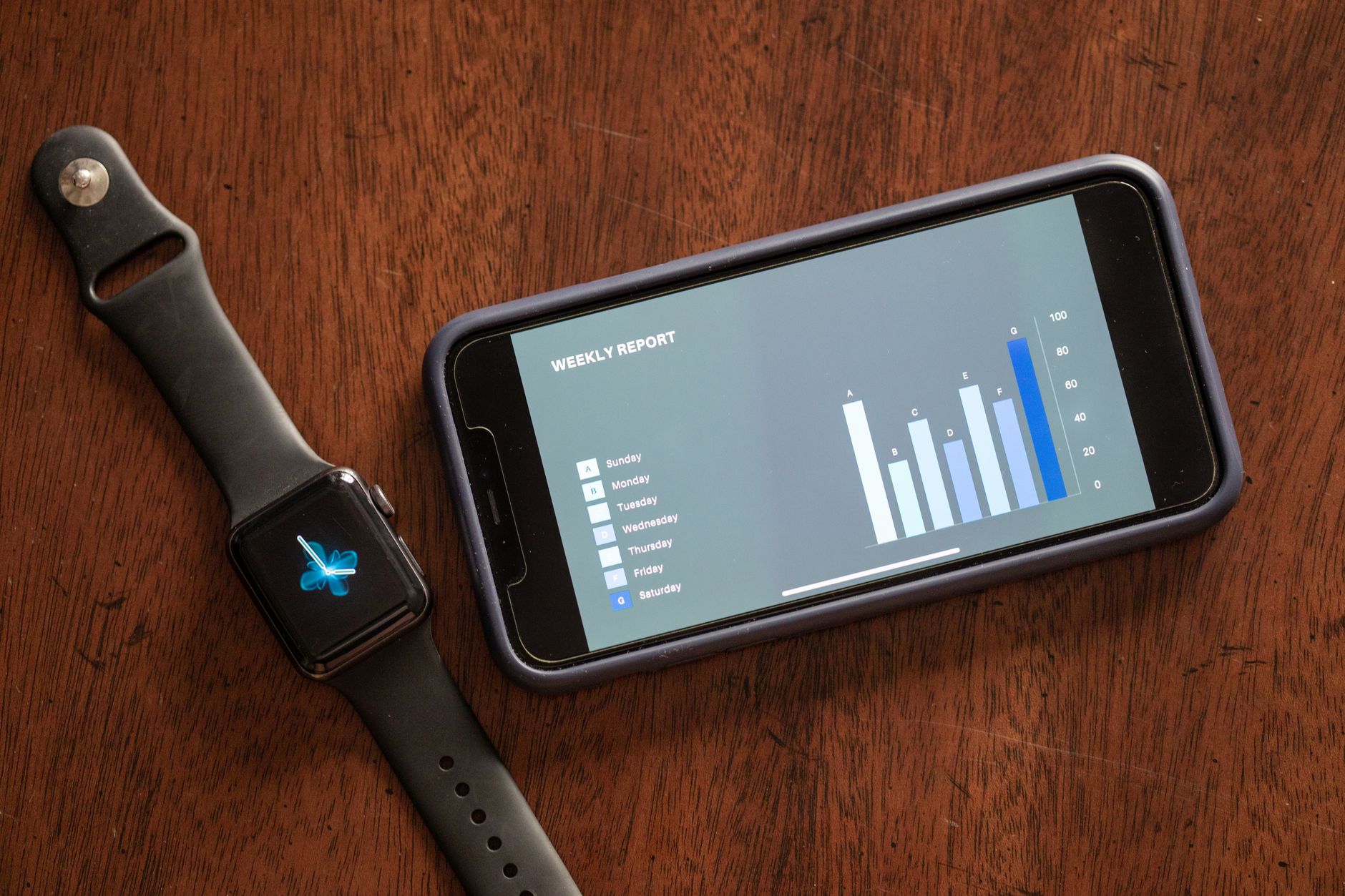
Progress tracking is equally important. Seeing a streak grow — even just seven days in a row — creates a powerful psychological reward. Consequently, missing a day feels costly rather than easy. This is the same mechanism behind habit-tracking apps, and it works just as well for spiritual disciplines.
Here are practical tips for building a consistent course-completion system:
- Set a daily alarm labeled with your course name as a visual cue.
- Use a habit tracker — even a simple paper chart — to mark each completed session.
- Tell someone your goal and ask them to check in weekly.
- Celebrate milestones — finishing a module deserves a small reward.
Moreover, pairing these habits with a Bible app that tracks your reading progress means you always know exactly where you stand. That visibility is a powerful motivator.
Step 5 — Take Notes That Connect Course Content to Scripture
Note-taking is the bridge between passive learning and active understanding. However, most people either skip notes entirely or keep them in a separate notebook that never gets reviewed. The better approach is to keep your notes inside your Bible app, attached directly to the relevant Scripture verses.
When your free online Bible course teaches a concept, open the key passage in your Bible app and write your note right there. The next time you read that passage — whether in a reading plan, a devotional, or a future course — your insight is waiting for you. Over months and years, your Bible becomes a personalized study library.
For a deeper look at how to build this kind of digital study environment, read our guide to building a digital study desk with Bible app tools. It covers how to organize notes, highlights, and cross-references into a system that grows with you.
Effective Bible course notes should include:
- The key teaching — one or two sentences summarizing the lesson's main point.
- The anchor verse — the specific passage the lesson was built on.
- A personal application — how does this truth change the way you think or act?
- A cross-reference — one other passage that confirms or expands the idea.
Specifically, this four-part note structure takes less than five minutes per lesson. Yet it dramatically increases how much you retain and how deeply you understand the material.
How to Use Free Online Bible Courses to Build Long-Term Study Habits
The ultimate goal is not to finish one course. It is to become the kind of person who consistently studies the Bible. Free online Bible courses are a fantastic entry point. However, the habits you build around them are what last.
Think of each course as a season of focused study. You pick a topic, spend four to twelve weeks going deep, and then move on to the next one. Over time, you cover the whole Bible systematically. Additionally, each season builds on the last because your notes and cross-references are all stored in one place.
Here is a simple annual rhythm for ongoing Bible learning:
- Q1: A Gospel survey course (Matthew, Mark, Luke, or John)
- Q2: A Pauline epistles course (Romans, Galatians, Ephesians)
- Q3: An Old Testament narrative course (Genesis, Exodus, or the Psalms)
- Q4: A theology or church history course to broaden your framework
Furthermore, each quarter you use your Bible app to set up a matching reading plan, activate daily reminders, and log notes on key passages. Consequently, by the end of the year, you have not just finished four courses — you have built a rich, layered understanding of Scripture that no single course could have given you alone.
For additional insight into understanding what you read in context, explore our guide on biblical context for everyday Bible app users. Understanding context is the key to making course content stick.
Why Prism Bible App Is the Missing Piece Between Desire and Consistency
Most free online Bible courses give you great content. However, they cannot follow you into your daily life. They cannot remind you at 7 a.m. that today's passage is waiting. They cannot show you a streak of 21 consecutive days. They cannot link a lesson on covenant theology to a verse in Deuteronomy with one tap.
Prism Bible App is built to do exactly that. It combines multiple Bible translations, rich cross-references, customizable reading plans, and deep contextual tools in one place. Specifically, it is designed for people who want to go beyond surface reading and actually understand what the Bible means — historically, culturally, and theologically.
Whether you are working through your first free online Bible course or your tenth, Prism gives you the structure to finish what you start. Get started with Prism Bible App for free and build the daily Bible study habit you have always wanted.
Additionally, if you want to test your biblical knowledge as you progress through a course, try Prism's Bible quizzes to reinforce what you are learning in a fun, engaging way. Quizzes are one of the most proven methods for long-term retention — a concept known in learning science as the testing effect.
Conclusion: Finish What You Start
The surge in searches for free online Bible courses tells a clear story: people want to grow in their faith and their knowledge of Scripture. However, wanting is not enough. Finishing requires a system — daily reminders, structured reading plans, cross-reference exploration, and consistent note-taking.
Ultimately, the best free online Bible course in the world is only as valuable as the habits built around it. Pair every course you take with a Bible app that keeps you on track, connects the lessons to real Scripture passages, and helps you see your progress over time. That combination — great content plus great structure — is what turns a good intention into a lasting transformation.
Discover how Prism Bible App can become your daily study companion. Visit Prism Bible App today and take the first step toward finishing — and truly understanding — every Bible course you start.