Bible Translations to Avoid? How to Discern Reliable Versions in Bible Apps Without the Drama

The Bible Translations to Avoid Debate — and Why It Misses the Point
Search for bible translations to avoid and you will find a storm of strong opinions. Some say avoid the NIV. Others say avoid the KJV. A few say avoid everything except one specific version. Meanwhile, new believers and seasoned readers alike are left confused and anxious. However, the real question is not which translation to fear — it is how to evaluate any translation with clear, honest criteria.
Fortunately, Bible scholarship gives us solid tools to do exactly that. Translation quality is not a mystery. It comes down to a few key factors: the source texts used, the translation philosophy chosen, the qualifications of the translators, and the transparency of the process. Furthermore, modern Bible apps make it easier than ever to examine these factors right inside the app itself.
This guide will walk you through what actually makes a translation reliable or unreliable. Additionally, it will show you how to use features like cross-references, study notes, and multiple translation comparisons to make smart, informed choices — without the drama.
What Actually Makes a Bible Translation Unreliable?
Before labeling any translation as one to avoid, it helps to understand what genuine red flags look like. Notably, most translations that draw criticism fall into one of a few clear categories. Knowing these categories helps you judge for yourself rather than rely on someone else's tribal loyalty.
Red Flag 1: A Single Translator With No Peer Review
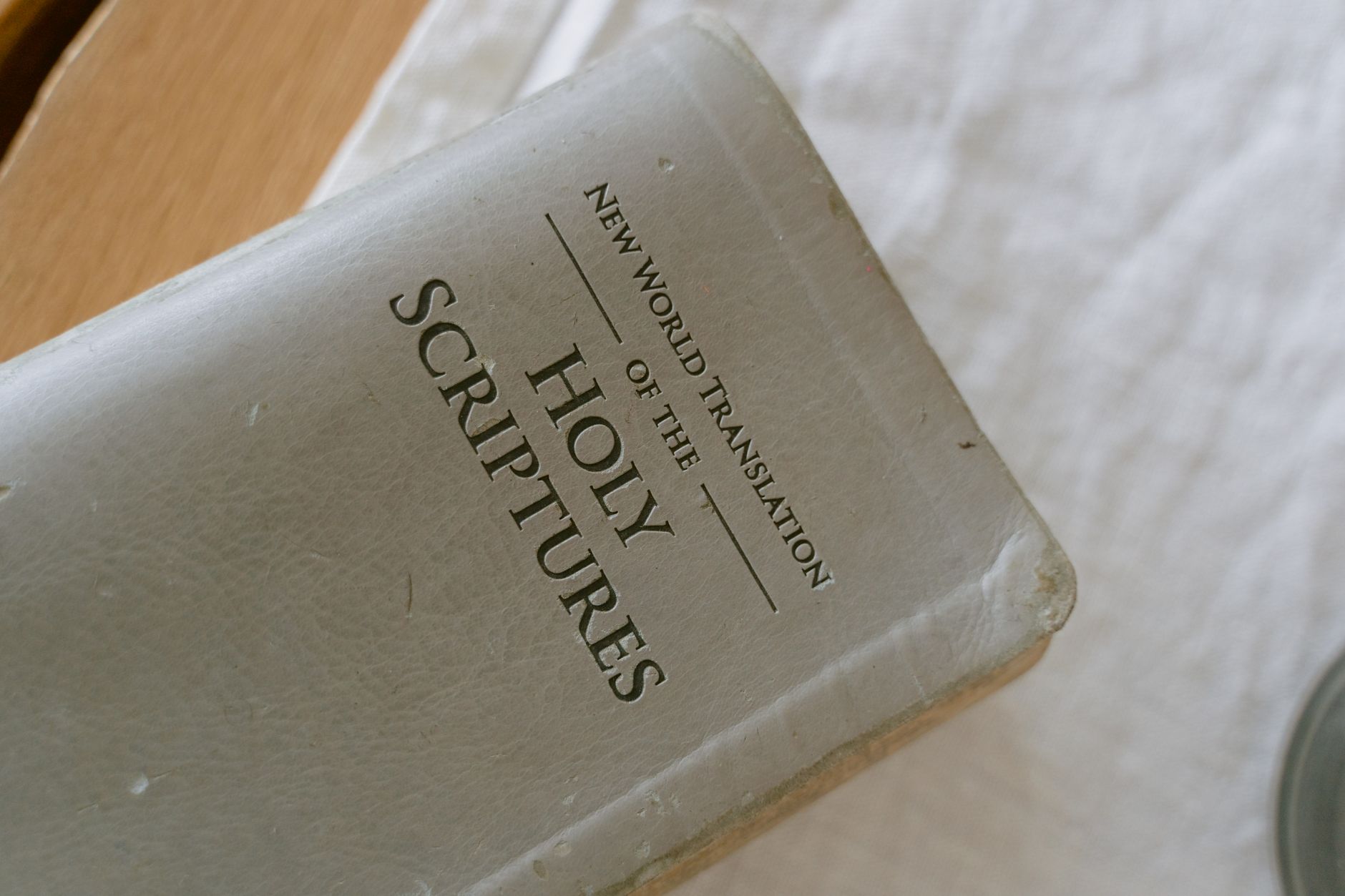
Reliable translations are produced by large committees of scholars. These committees include experts in Hebrew, Greek, Aramaic, and ancient Near Eastern culture. The New World Translation (NWT), for example, was produced by a small anonymous committee with no disclosed credentials. As a result, many mainstream scholars — including those with no particular denominational bias — have flagged specific word choices as departing from the original Greek without textual support.
By contrast, translations like the English Standard Version (ESV), the New International Version (NIV), and the New Revised Standard Version Updated Edition (NRSVue) all involved large teams of credentialed scholars from multiple institutions and denominations. Transparency about who did the work is a basic quality signal.
Red Flag 2: A Hidden or Unusual Source Text
Every Bible translation starts with a source text. For the Old Testament, most reliable translations use the Masoretic Text, often compared with the Dead Sea Scrolls and the Septuagint. For the New Testament, most use a critical Greek text like the Nestle-Aland or UBS Greek New Testament.
However, some translations rely solely on the Textus Receptus — a 16th-century Greek compilation — and present it as the only valid source. This is not a disqualifying fact on its own. The KJV and NKJV use it, and millions find them deeply meaningful. The red flag arises when a translation hides its source text or claims other manuscripts are corrupt without scholarly evidence.
Red Flag 3: Doctrinal Agenda Over Accuracy
Some translations are produced by a single religious group to support specific doctrines. When translation choices consistently favor one theological position — especially on disputed passages — that is a sign of agenda over accuracy. Specifically, look for cases where a key Greek or Hebrew word is translated differently in one verse than in all other places it appears. Consistency in word choice is a hallmark of honest translation work.
Translation Philosophy: Formal vs. Dynamic Equivalence
One of the biggest sources of confusion in the bible translations to avoid conversation is translation philosophy. Many people condemn a translation simply because it sounds different from what they grew up reading. However, sounding different does not mean being wrong.
There are two main approaches to Bible translation. Understanding them removes a lot of unnecessary fear.
- Formal Equivalence (Word-for-Word): This approach tries to match each word in the original language to a word in English. Examples include the ESV, NASB, and KJV. These are great for detailed word studies.
- Dynamic Equivalence (Thought-for-Thought): This approach translates the meaning of a phrase rather than each individual word. Examples include the NIV, NLT, and CSB. These are often easier to read and understand quickly.
- Paraphrases: These take even more freedom with the text. The Message is a well-known example. Paraphrases are best used as devotional reading, not as primary study tools.
Neither formal nor dynamic equivalence is inherently more faithful. Each serves a different purpose. Consequently, the best Bible students use more than one translation. Comparing versions side by side often reveals layers of meaning that no single translation can capture alone.
You can explore this further in our post on Bible Translations by Reading Level, which breaks down which versions work best for different audiences.
How to Evaluate Translations Inside a Bible App
Here is where Bible apps become genuinely powerful. Instead of taking someone else's word for which translation to trust, you can investigate right inside the app. Modern tools give you everything you need to make an informed judgment.
Use Cross-References to Check Consistency
Cross-references link related verses across the Bible. They are one of the best ways to check whether a translation handles a word or concept consistently. For instance, if a translation renders a Greek word one way in John 1 but a completely different way in Colossians 1 — with no note explaining why — that inconsistency deserves scrutiny.
According to research on biblical cross-references, the Bible contains tens of thousands of internal connections. A reliable translation will handle these connections with care and consistency. Prism Bible App surfaces cross-references naturally as you read, making this kind of comparison easy and fast.
Read the Translator's Preface and Study Notes
Every reputable translation includes a preface. This document explains the source texts used, the translation philosophy chosen, and the qualifications of the team. If a translation has no preface or hides this information, that is a serious warning sign. Study notes in a good Bible app will also flag textual variants — places where ancient manuscripts differ — so you can see exactly where translators made judgment calls.
Discover how study notes and original language tools work together in our guide on Christian Study Bibles in App Form.
Compare Multiple Translations Side by Side
Perhaps the single most powerful habit for any Bible student is reading multiple translations together. When several translations agree on a passage, you can be confident in the meaning. When they differ, that difference itself is a teaching moment. It shows you where the original language is ambiguous or where scholars genuinely debate the best rendering.
Additionally, comparing translations helps you spot outliers. If one version translates a verse in a way that no other credible translation supports, that is worth noting. It does not automatically mean the translation is wrong — but it does mean you should look deeper.

Commonly Questioned Translations — A Balanced Look
Rather than issuing a list of translations to avoid, here is a fair look at versions that often come up in these debates. The goal is clarity, not condemnation.
The King James Version (KJV)
The KJV is one of the most beloved translations in history. However, it was produced in 1611 from manuscripts that were available at that time. Since then, scholars have discovered older, more complete manuscripts — including the Dead Sea Scrolls. As a result, some passages in the KJV reflect a less complete picture of the original text. This does not make it unreliable for devotion and worship. It does mean it should be paired with a modern critical translation for detailed study.
The New World Translation (NWT)
This translation, produced by Jehovah's Witnesses, is the most frequently cited example of a doctrinally driven translation. Specifically, its rendering of John 1:1 — translating "theos" as "a god" rather than "God" — departs from how virtually every other Greek scholar has rendered the text. Bible Gateway's overview of translation differences offers helpful context on how translation choices like this are evaluated by the broader scholarly community.
The Message (MSG)
The Message is a paraphrase by Eugene Peterson, not a translation in the traditional sense. Peterson himself was clear about this. It is a creative retelling meant to bring the Bible's energy to modern readers. Therefore, it is best used as a devotional supplement rather than a primary study text. Using it alongside a word-for-word translation gives you the best of both worlds.
The New International Version (NIV)
The NIV is one of the most criticized translations in certain circles — and also one of the most widely used in the world. Most criticism centers on its use of gender-inclusive language in updated editions. However, the NIV is produced by a large committee of credentialed scholars, uses strong source texts, and is transparent about its methodology. Disagreeing with its choices is fair. Calling it unreliable requires a higher bar of evidence.
The Role of Context in Understanding Any Translation
Even the most reliable translation can be misread without its historical and cultural context. This is why biblical context is just as important as translation quality. A verse that sounds strange in English may make perfect sense once you understand the ancient setting, the literary genre, or the original audience.
For a deeper look at this, read our guide on What Is Biblical Context. It walks through practical ways to use context tools inside a Bible app to unlock the meaning behind difficult passages.
Furthermore, tools like historical maps, cultural background notes, and original language lexicons all work together to give you a fuller picture. Prism Bible App integrates these tools so you can move from text to context in just a few taps. Get started for free and see how these features change the way you read Scripture.
A Practical Framework for Choosing Your Translations
Instead of asking which translations to avoid, try asking these four questions about any version you encounter.
- Who translated it? Look for a named committee of credentialed scholars from multiple backgrounds. Avoid anonymous or single-translator versions unless the credentials are clearly documented.
- What source texts were used? A reliable translation will clearly state whether it used the Masoretic Text, the Dead Sea Scrolls, the Septuagint, and which Greek New Testament critical text it followed.
- What is the translation philosophy? Know whether you are reading a formal, dynamic, or paraphrase version — and choose accordingly for your purpose.
- Is it transparent? A trustworthy translation includes a detailed preface, footnotes on textual variants, and notes where scholars made difficult judgment calls.
According to the Society of Biblical Literature's translation guidelines, transparency and scholarly accountability are the two most important markers of a reliable Bible translation. These are the standards used by academic institutions worldwide — and they are the same standards you can apply as an everyday reader.
Conclusion: Calm, Informed, and Equipped
The bible translations to avoid conversation does not have to be anxious or divisive. Most translations available in mainstream Bible apps today are produced with genuine care for accuracy. The ones that deserve real caution are those with hidden translators, undisclosed source texts, or a clear doctrinal agenda that overrides linguistic evidence.
Moreover, you do not have to take anyone's word for it. Use the tools inside your Bible app — cross-references, study notes, multiple translations, and contextual background — to investigate for yourself. That kind of active, curious engagement is exactly what good Bible study looks like.
Ultimately, the goal is not to find the one perfect translation. The goal is to understand Scripture as deeply and honestly as possible. Explore the best Bible study tools available today and build a reading practice that brings clarity, not confusion. Sign up for Prism and start comparing translations, exploring cross-references, and studying Scripture in its full historical context — all in one place.