Bible Translations to Avoid? A Balanced Guide for Digital Bible Study
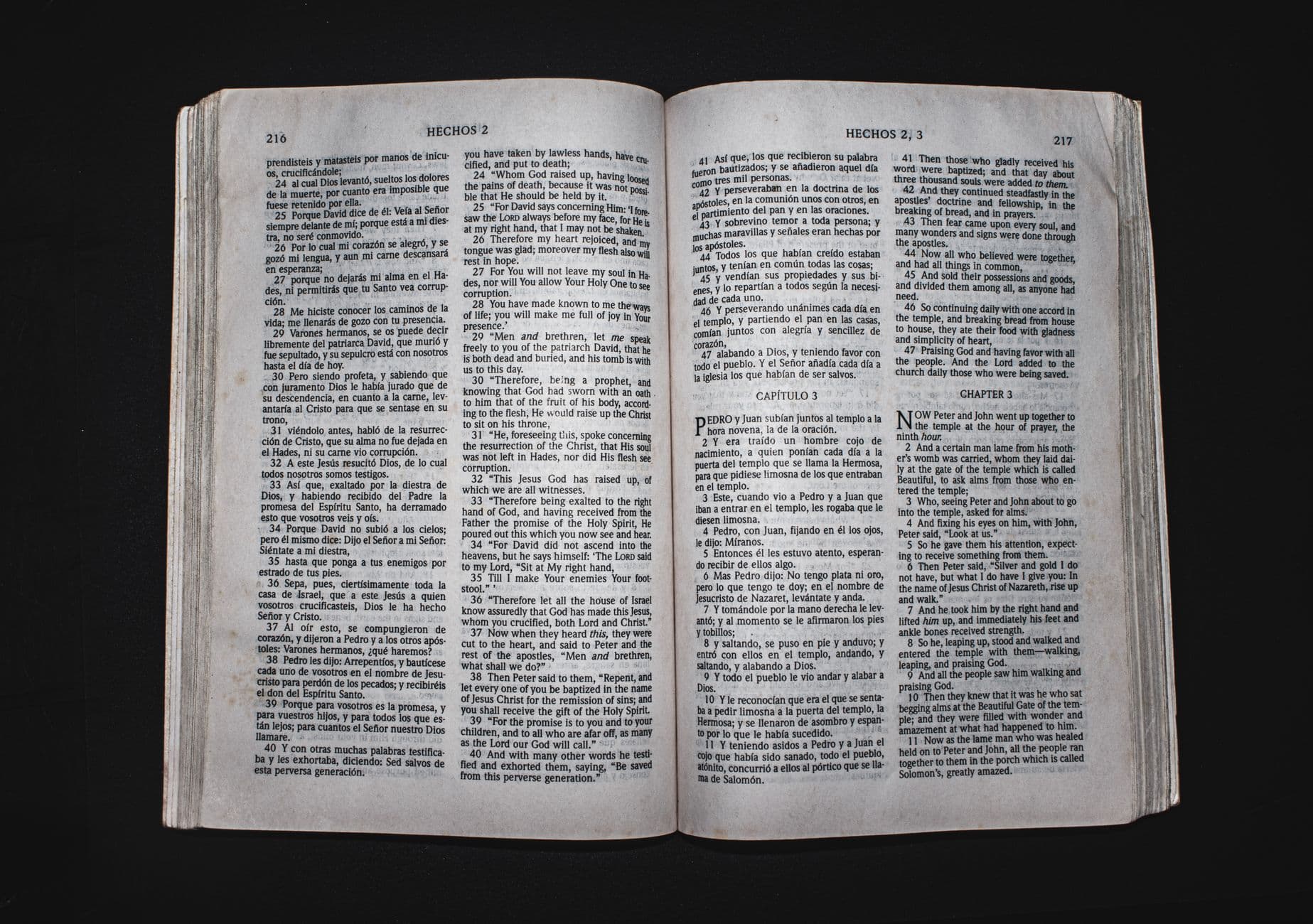
Are There Really Bible Translations to Avoid?
Search for bible translations to avoid and you will find hundreds of heated blog posts and YouTube videos. Most of them are more passionate than helpful. They hand you a list, tell you to stay away, and leave you more confused than before. However, the real question is not simply which Bible to avoid — it is how to evaluate any translation wisely, especially when you are studying on a digital app.
This guide takes a calm, balanced approach. We will look at the most common concerns readers raise about Bible translations. Then we will show you how to use the tools inside a modern Bible study app to check those concerns yourself. Ultimately, an informed reader is far safer than one who just follows a viral list.

Understanding the Core Concerns About Bible Translations
Before we label any translation as one to avoid, we need to understand why people raise concerns in the first place. There are three main issues that come up again and again in these discussions. Knowing them will help you think more clearly about every version you encounter.
1. Paraphrases vs. Formal Translations
Not every Bible on the shelf is a translation in the strict sense. Some are paraphrases — rewrites that prioritize readability and modern feel over word-for-word accuracy. The Message (MSG) and The Living Bible (TLB) are well-known examples. They can be great for devotional reading, but they should never be your only study Bible.
A formal translation, like the English Standard Version (ESV) or the New American Standard Bible (NASB), tries to stay as close as possible to the original Hebrew and Greek words. Additionally, a dynamic equivalence translation, like the New International Version (NIV), balances readability with accuracy. Knowing where a Bible falls on this spectrum is the first step in evaluating it.
2. Theological Bias in Translation Choices
Every translation team makes choices. Sometimes those choices reflect the theological tradition of the translators. For instance, a translation committee from one denomination may render a contested Greek word differently than a committee from another. This is not always dishonest — it is often an honest difference of interpretation.
However, some translations push a specific theological agenda so strongly that they distort the original text. The New World Translation (NWT), produced by Jehovah's Witnesses, is frequently cited as an example. Scholars have noted that key passages about the deity of Christ are rendered in ways that differ sharply from the original Greek. The Gospel Coalition has published a thorough scholarly review of these translation choices. This is the kind of concern that deserves serious attention — not panic, but careful study.
3. Missing or Added Verses
Some readers are alarmed when they open a modern translation and find that a familiar verse is missing or placed in a footnote. For example, Mark 16:9-20 and John 7:53–8:11 appear in some translations but are bracketed or footnoted in others. This is not a conspiracy. It reflects decisions based on the oldest available manuscripts.
Specifically, modern translations like the ESV and NIV rely on older, more reliable manuscripts discovered after the King James Version was produced in 1611. Notably, the Biblica FAQ on missing verses explains this clearly and without sensationalism. Understanding this context changes the conversation entirely.
Which Bible Translations Raise the Most Concern — and Why
Rather than giving you a list to memorize, let us walk through the most commonly flagged translations and explain the specific concerns scholars and pastors raise. This way, you can decide for yourself.
- New World Translation (NWT): Produced by the Watchtower Society. Scholars widely note that it alters key Christological passages to fit Jehovah's Witness theology. For example, John 1:1 reads "a god" instead of "God," which is a significant departure from the Greek text.
- The Message (MSG): A paraphrase by Eugene Peterson. It is creative and readable, but it takes enormous liberties with the original text. Therefore, it should be used alongside a formal translation, not instead of one.
- The Passion Translation (TPT): A newer paraphrase that has drawn criticism from scholars for adding words and concepts not present in the original languages. Many theologians recommend caution with this one for serious study.
- The Living Bible (TLB): An older paraphrase by Kenneth Taylor. It was a personal project to help his children understand scripture. Furthermore, it is not based on original languages but on an English translation, which adds an extra layer of distance from the source text.
- New Age Bible Versions (NABV): This is not a real translation but a title of a controversial book by Gail Riplinger that attacks modern translations. Many of its claims have been refuted by textual scholars. Consequently, be cautious about sources that cite it heavily.
Notably, most mainstream translations — KJV, NKJV, NIV, ESV, NASB, CSB, NLT — are produced by large teams of qualified scholars and are reliable for study. They differ in style and approach, but none of them should be on a "avoid at all costs" list for the average reader.
How to Evaluate Any Bible Translation Inside a Study App
This is where digital Bible study tools become truly powerful. Instead of trusting a blogger's list, you can investigate translations yourself using the features built into a good Bible app. Here is how to do it step by step.
Step 1: Compare Multiple Translations Side by Side
The fastest way to spot a translation issue is to put two or three versions next to each other. Open a verse that concerns you and read it in the ESV, NASB, NIV, and KJV simultaneously. If one version reads dramatically differently, that is your signal to dig deeper.
With Prism Bible App's scripture tools, you can view multiple translations at once and quickly spot where a version diverges. This single habit will teach you more about Bible translation than any viral list ever could.
Step 2: Check the Cross-References
Cross-references link a passage to other scriptures that use the same word, theme, or idea. They are one of the most underused tools in Bible study. If a translation renders a key word in an unusual way, checking the cross-references will show you how that word is used elsewhere in scripture.
For example, if a translation renders John 1:1 in a way that seems off, cross-referencing with John 1:14, Colossians 1:15-17, and Hebrews 1:3 will give you a much richer picture of what the original author meant. Learn more about how cross-references work and why they matter so much for accurate Bible study.
Step 3: Read the Translation's Preface and Footnotes
Every serious Bible translation includes a preface that explains the translation philosophy. Additionally, footnotes often explain why a specific word was chosen or note that other manuscripts read differently. These notes are gold for any serious student.
A paraphrase like The Message will openly tell you in its preface that it is a paraphrase. A translation with a theological agenda, however, may not be so transparent. Therefore, always read the front matter before you trust a new version.
Step 4: Use Original Language Tools
You do not need to know Greek or Hebrew to use original language tools. Many Bible apps include Strong's Concordance numbers, which let you tap on any English word and see the original Greek or Hebrew word behind it. You can then check how that same word is translated in other passages.
This is especially useful for contested passages. If a translation renders a Greek word in a unique way that no other translation does, that is a red flag worth investigating. Discover how tools like these can transform your study by visiting the ultimate guide to Christian study Bibles in app form.

A Practical Framework: Questions to Ask About Any Translation
Instead of relying on someone else's list of bible translations to avoid, use this simple framework. Ask these questions every time you encounter a new version.
- Who produced it? Was it a broad team of scholars from multiple denominations, or a single person or organization with a specific agenda?
- What is the translation philosophy? Is it formal equivalence, dynamic equivalence, or a paraphrase? All three have valid uses, but you need to know which you are reading.
- What manuscripts does it use? Does the preface explain the textual basis? Translations based on the oldest and most reliable manuscripts are generally more trustworthy.
- How does it handle contested passages? Does it add footnotes explaining textual variants, or does it simply omit them without comment?
- What do credible scholars say? Look for reviews from trained biblical scholars, not just popular bloggers. The Society of Biblical Literature is a good starting point for academic perspectives.
Moreover, remember that no translation is perfect. Every version is a human attempt to carry ancient words across a language barrier. The goal is not to find a perfect Bible — it is to study wisely using the best tools available to you.
The Role of Biblical Context in Translation Evaluation
One of the most important skills in evaluating any translation is understanding biblical context. A verse that looks alarming in isolation often makes perfect sense when you read the surrounding chapters, understand the historical setting, and consider the original audience.
For instance, many readers are troubled by translations that render certain Old Testament passages in ways that seem harsh or strange. However, when you understand the ancient Near Eastern culture in which those words were written, the translation often makes much more sense. Consequently, context is not just helpful — it is essential.
Get started with building this skill by reading what is biblical context: a simple guide for everyday Bible app users. It will change the way you read every translation.
Recommended Translations for Serious Bible Study
To give you a positive path forward, here are the translations most widely recommended by biblical scholars and educators for serious study. These are not the only good options, but they are a reliable starting point.
- ESV (English Standard Version): A formal equivalence translation known for accuracy and readability. Widely used in academic and church settings.
- NASB (New American Standard Bible): One of the most literal English translations available. Excellent for word studies and original language comparison.
- NIV (New International Version): A dynamic equivalence translation that balances accuracy with modern readability. One of the most widely read versions in the world.
- CSB (Christian Standard Bible): A newer translation that aims for "optimal equivalence" — close to the original while remaining natural in English.
- KJV (King James Version): The historic standard of English Bible translation. Beautifully written, though the 17th-century language can be a barrier for some readers.
- NLT (New Living Translation): A thought-for-thought translation that is very readable. Great for devotional use alongside a more formal translation.
Furthermore, using two or three of these together — one formal and one readable — gives you the benefits of both approaches. This is exactly the kind of multi-translation study that a good Bible app makes easy.
Final Thoughts: Be a Wise Reader, Not a Fearful One
The search for bible translations to avoid often comes from a genuine desire to honor God's Word. That desire is good. However, fear and suspicion are not the right tools for Bible study. Knowledge, context, and careful comparison are.
Most mainstream translations are trustworthy. A small number of versions — particularly those produced by a single organization with a strong theological agenda — deserve more scrutiny. But even then, the answer is not blind avoidance. The answer is informed reading, supported by good tools.
A modern Bible study app gives you everything you need to be that kind of reader. You can compare translations, check cross-references, read footnotes, and explore original languages — all in one place. Additionally, you can build reading plans that expose you to multiple books and contexts, deepening your understanding over time.
Get started today with Prism Bible App and discover how powerful digital Bible study tools can be. You do not need a list of translations to fear. You need the skills and tools to study wisely — and those are well within your reach.