Bible Study Tools for Beginners: A 7-Step App-First Guide to Going Deeper in Scripture

If you've ever opened a Bible and felt lost, you're not alone. Finding the right bible study tools for beginners can feel overwhelming — especially when most guides point you toward heavy academic books instead of the phone already in your pocket. However, modern Bible study apps have changed everything. Today, a complete digital study desk fits in your hand. This guide walks you through seven simple steps to build a solid, app-first Bible study practice — no seminary degree required.

Why Bible Study Tools for Beginners Should Start with an App
Print resources like concordances and commentaries are valuable. However, they can cost hundreds of dollars and take years to master. Meanwhile, Bible study apps give you instant access to multiple translations, cross-references, and study notes — all in one place. For a beginner, that accessibility removes the biggest barrier: getting started.
According to Pew Research Center, most Christians who read the Bible regularly do so on a digital device. Furthermore, app-based tools update constantly, adding new features without any extra cost. Consequently, starting with an app is not cutting corners — it's the smart, modern choice.
Apps like Prism Bible App combine scripture analysis, multiple translations, cross-references, and personalized reading plans in one clean interface. Therefore, your first step is simply choosing the right app as your home base.
Step 1 — Choose Your Home-Base Bible Study App
Your home-base app is the tool you return to every single day. Think of it as your digital study desk. Specifically, look for an app that offers these core features:
- Multiple Bible translations side by side
- Cross-references that link related passages
- Reading plans tailored to your pace and goals
- Historical and cultural context notes
- Search and highlight tools for personal notes
Prism Bible App checks every one of these boxes. Additionally, it layers in interactive maps and original-language tools that grow with you as your study deepens. Get started for free and set up your account in under two minutes.
Step 2 — Pick the Right Bible Translation for Your Level
Translation choice is one of the most important early decisions a beginner makes. Fortunately, it doesn't have to be complicated. Different versions serve different purposes, and using two or three together is perfectly fine.
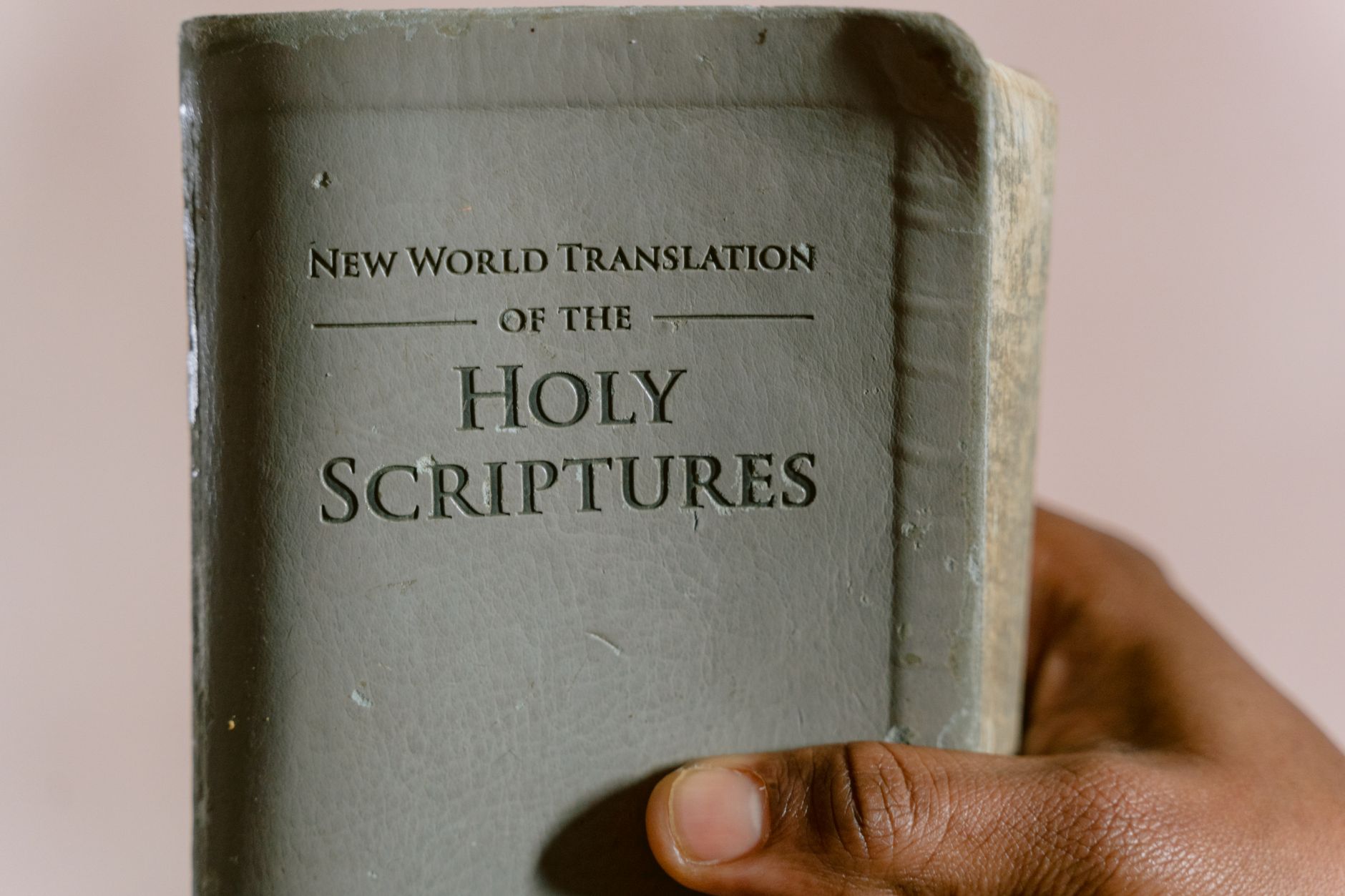
Here is a simple breakdown of popular translations by reading level:
- New Living Translation (NLT) — Easy, conversational language. Great for first-time readers.
- New International Version (NIV) — Balanced readability and accuracy. A solid all-around choice.
- English Standard Version (ESV) — More literal. Good once you're comfortable with the basics.
- King James Version (KJV) — Classic and poetic, but older English can slow beginners down.
Moreover, reading two translations side by side reveals nuances you'd otherwise miss. For a deeper look at which version fits your stage of life, read our full guide on Bible translations by reading level.
Step 3 — Start with a Structured Reading Plan
One of the biggest mistakes beginners make is opening to a random page and hoping for inspiration. Instead, a structured reading plan gives you direction, momentum, and a sense of progress. Specifically, plans break the Bible into manageable daily portions so you never feel lost.
Reading plans come in many shapes:
- Chronological plans — Read events in the order they happened historically.
- Book-by-book plans — Focus on one book at a time for deep understanding.
- Thematic plans — Study topics like prayer, faith, or forgiveness across multiple books.
- New Testament first plans — A gentle entry point for brand-new readers.
Prism's personalized reading plans adapt to your schedule and goals. Explore reading plans on Prism and find one that fits your life today. Furthermore, completing even a short daily plan builds a habit that compounds over weeks and months.
Step 4 — Use Cross-References to Connect the Whole Bible
The Bible is not a random collection of stories. Instead, it is one unified narrative with thousands of intentional connections across its 66 books. Cross-references are the links that show you those connections in real time.
For example, when you read Isaiah 53, cross-references point you to Matthew 8 and 1 Peter 2 — showing how one prophecy echoes across centuries. Additionally, cross-references help you interpret a passage by seeing how the same theme appears elsewhere in Scripture. This is a core skill in biblical context study.
According to OpenBible.info's cross-reference data, there are over 340,000 cross-references in the Bible. Notably, no print concordance can surface those connections as fast as a good app can. For a data-driven look at how cross-references work, read our guide on cross-references in the Bible.

Step 5 — Add Historical and Cultural Context to Every Passage
Reading the Bible without context is like watching a movie with the sound off. You can see what's happening, but you miss most of the meaning. Historical and cultural context tells you who wrote a passage, when, why, and to whom.
For instance, understanding that Paul wrote Philippians from prison changes how you read his words about joy. Similarly, knowing that the Sermon on the Mount challenged specific Jewish traditions makes its radical claims far more vivid. Context is not optional — it is the key to accurate interpretation.
Prism Bible App builds context directly into the reading experience. However, if you want a deeper explanation of why context matters, check out our simple guide to biblical context for everyday app users.
Quick Context Checklist for Any Passage
- Who is the author, and what is their background?
- Who is the original audience?
- What historical events surround this writing?
- What literary genre is this — poetry, prophecy, letter, or narrative?
- How does this passage fit the larger book and Bible story?
Step 6 — Explore Basic Commentary and Study Notes
Commentary sounds intimidating, but think of it as a knowledgeable friend explaining a passage in plain language. Study notes are short, focused comments that appear alongside the text. They explain difficult words, cultural customs, and theological ideas without overwhelming you.
As a beginner, you don't need a 12-volume commentary set. Instead, start with the inline notes available in your Bible study app. Specifically, look for notes that explain:
- The meaning of key words in the original Hebrew or Greek
- Historical customs that affect the passage's meaning
- How early Christians or Jewish scholars understood the text
- Theological themes and their significance
Moreover, good study notes point you toward other passages rather than doing all your thinking for you. The goal is to grow your own ability to interpret Scripture — not to create dependency on a single commentator. Consequently, treat study notes as a starting point, not a final answer.
Step 7 — Try Interlinear Views and Original Languages (Easier Than You Think)
Many beginners assume original-language study is only for scholars. However, modern apps make it surprisingly accessible. An interlinear view shows the original Hebrew or Greek word directly beneath each English word. You don't need to know the alphabet — the app does the heavy lifting.
Why does this matter? Because English translations sometimes compress or paraphrase rich original terms. For example, the Greek word agape is translated simply as "love," but it carries a depth of meaning that the English word alone doesn't fully capture. Seeing the original term — even briefly — opens up that depth.
Additionally, many apps now link each original word to a dictionary entry. Therefore, you can tap a word and instantly see its full range of meaning, how it's used elsewhere in the Bible, and how translators have rendered it across versions. This is one of the most powerful bible study tools for beginners that most people never discover.
For a full breakdown of how to access original languages and study notes on your phone, read our ultimate guide to Christian study Bibles in app form.
Putting It All Together: Your Daily Bible Study Routine
Seven steps can sound like a lot. However, in practice, a daily app-first Bible study session takes as little as 15 minutes. Here is a simple routine that ties all seven steps together:
- Open your app and navigate to today's reading plan passage. (Step 1 and 3)
- Read the passage in two translations side by side. (Step 2)
- Tap a cross-reference to see a connected passage. (Step 4)
- Check the context notes for historical background. (Step 5)
- Read one or two study notes on key verses. (Step 6)
- Tap one original-language word that stands out to you. (Step 7)
- Write a one-sentence reflection in your app's notes or journal. (Bonus habit)
Notably, this routine is designed to grow with you. As you get more comfortable, you'll naturally spend more time on steps four through seven. Furthermore, each step reinforces the others — context makes cross-references richer, and original languages deepen your appreciation of both.
Common Mistakes Beginners Make — and How to Avoid Them
Even with great tools, a few common pitfalls can slow your progress. Here are the ones to watch for:
- Skipping the reading plan — Without structure, study becomes sporadic. Stick to a plan, even a short one.
- Reading only one translation — No single version captures every nuance. Compare at least two.
- Ignoring context — Applying a verse without its context often leads to misinterpretation.
- Collecting apps instead of using one well — Pick a strong home-base app and go deep before adding more tools.
- Waiting until you feel "ready" — There is no perfect moment. Start today with what you have.
Additionally, don't let perfectionism stop you. Consistent, imperfect study beats occasional, perfect study every time. Consequently, showing up daily — even for just ten minutes — builds the habit that transforms your understanding over months and years.
Frequently Asked Questions About Bible Study Tools for Beginners
Do I need to buy any books to start studying the Bible?
No. A well-designed Bible study app gives you everything a beginner needs — translations, cross-references, reading plans, and study notes — at no cost. Therefore, start with an app and add print resources only if you develop a specific need for them later.
How long should a beginner Bible study session be?
Start with 10 to 15 minutes per day. Specifically, consistency matters far more than length. Furthermore, short daily sessions build stronger habits than long, infrequent ones. As your interest grows, your sessions will naturally expand.
Is it okay to use multiple Bible apps?
Yes, but choose one as your primary tool. Additionally, using too many apps at once can create confusion and slow your progress. Ultimately, depth in one great app beats breadth across five mediocre ones.
What's the best first book of the Bible to study?
Most beginners benefit from starting with the Gospel of John or the Gospel of Mark. However, if you prefer the Old Testament, the Psalms offer an accessible and emotionally rich entry point. Notably, your reading plan will guide you through a logical sequence once you choose a starting point.
Ready to Go Deeper? Start Your Bible Study Journey Today
The best bible study tools for beginners are the ones you actually use. Modern apps remove every barrier that once made serious Bible study feel out of reach. Furthermore, the seven steps in this guide give you a clear, repeatable process that builds real understanding over time.
Prism Bible App was built specifically for this kind of deep, accessible, app-first study. It combines scripture analysis, multiple translations, cross-references, interactive maps, and personalized reading plans in one beautiful interface. Create your free Prism account today and take your first step toward a richer, more meaningful engagement with Scripture. Discover what it feels like when the Bible truly comes alive.